
Comparison at a glance
| Dimension | AAP 2022 | NICE CG98 |
|---|---|---|
| Primary scope | Management and prevention of hyperbilirubinemia in newborn infants 35 or more weeks’ gestation. | Recognition, assessment, and treatment of jaundice in newborn babies under 28 days. |
| Age axis | Postnatal age in hours. | Postnatal age in hours. |
| Gestational age | Gestational-age-specific curves from 35 weeks onward. | Threshold table for babies 38 weeks or more plus gestation-specific treatment graphs. |
| Additional risk | Separate threshold figures based on the presence of hyperbilirubinemia neurotoxicity risk factors, as defined by AAP. | Risk factors appear across assessment and monitoring recommendations; treatment charts are organized primarily by gestational age. |
| Units commonly shown | mg/dL in the published figures and recommendations. | micromol/L in the published table and graphs. |
| Treatment boundaries | Phototherapy, escalation-of-care, and exchange transfusion thresholds. | Phototherapy and exchange transfusion thresholds, with surrounding monitoring and intensified-phototherapy recommendations. |
| Rapid rise context | At least 0.3 mg/dL/h in the first 24 hours or at least 0.2 mg/dL/h thereafter is described as exceptional and suggestive of hemolysis. | More than 8.5 micromol/L/h is described as rapidly rising in specified treatment and risk recommendations. |
Do not choose between frameworks by selecting the more favorable threshold or convert one guideline’s logic into the other. Use the framework required by your clinical setting and apply its complete recommendations.
AAP 2022: key distinctions
The AAP guideline applies from 35 weeks’ gestation. Its treatment figures vary by gestational age and whether additional hyperbilirubinemia neurotoxicity risk factors are present. The AAP implementation FAQ clarifies that Figure 3 is used for infants 35–37 6/7 weeks only when there are additional neurotoxicity risk factors besides gestational age.
The AAP also bases post-discharge follow-up planning on the difference between the bilirubin concentration and the hour-specific phototherapy threshold, modified by other clinical considerations.
NICE CG98: key distinctions
NICE CG98 covers newborn babies under 28 days and provides a threshold table for babies of 38 weeks or more together with treatment-threshold graphs by gestational age. NICE materials conventionally display bilirubin in micromol/L.
NICE explicitly notes that reported bilirubin can vary between assays from different manufacturers and advises clinicians to consult their local pathology laboratory when interpreting threshold tables or charts.
Choosing the correct framework
- Follow the guideline adopted by the healthcare system, institution, or service in which care is delivered.
- Confirm that the infant is within the selected guideline’s intended population.
- Keep units visible through data entry, interpretation, documentation, and handoff.
- Apply that framework’s definitions of risk factors and its surrounding recommendations.
- Consult local policy where laboratory methods, escalation pathways, or follow-up resources affect implementation.
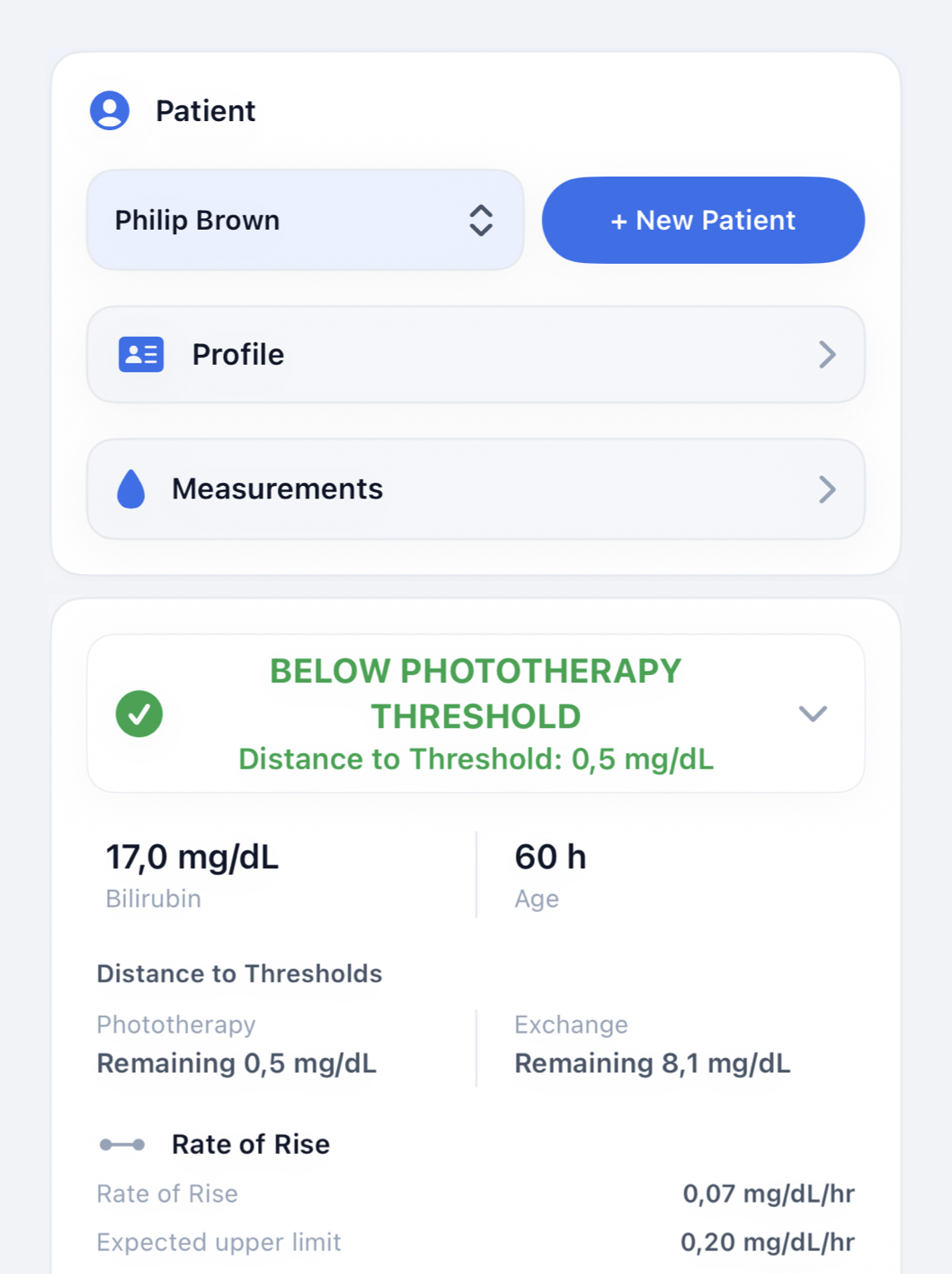
NeoBili Pro example
Switch frameworks without mixing them
Select AAP 2022 or NICE CG98, then review the measurement and serial trend within that guideline’s threshold view.
View NeoBili Pro on the App Store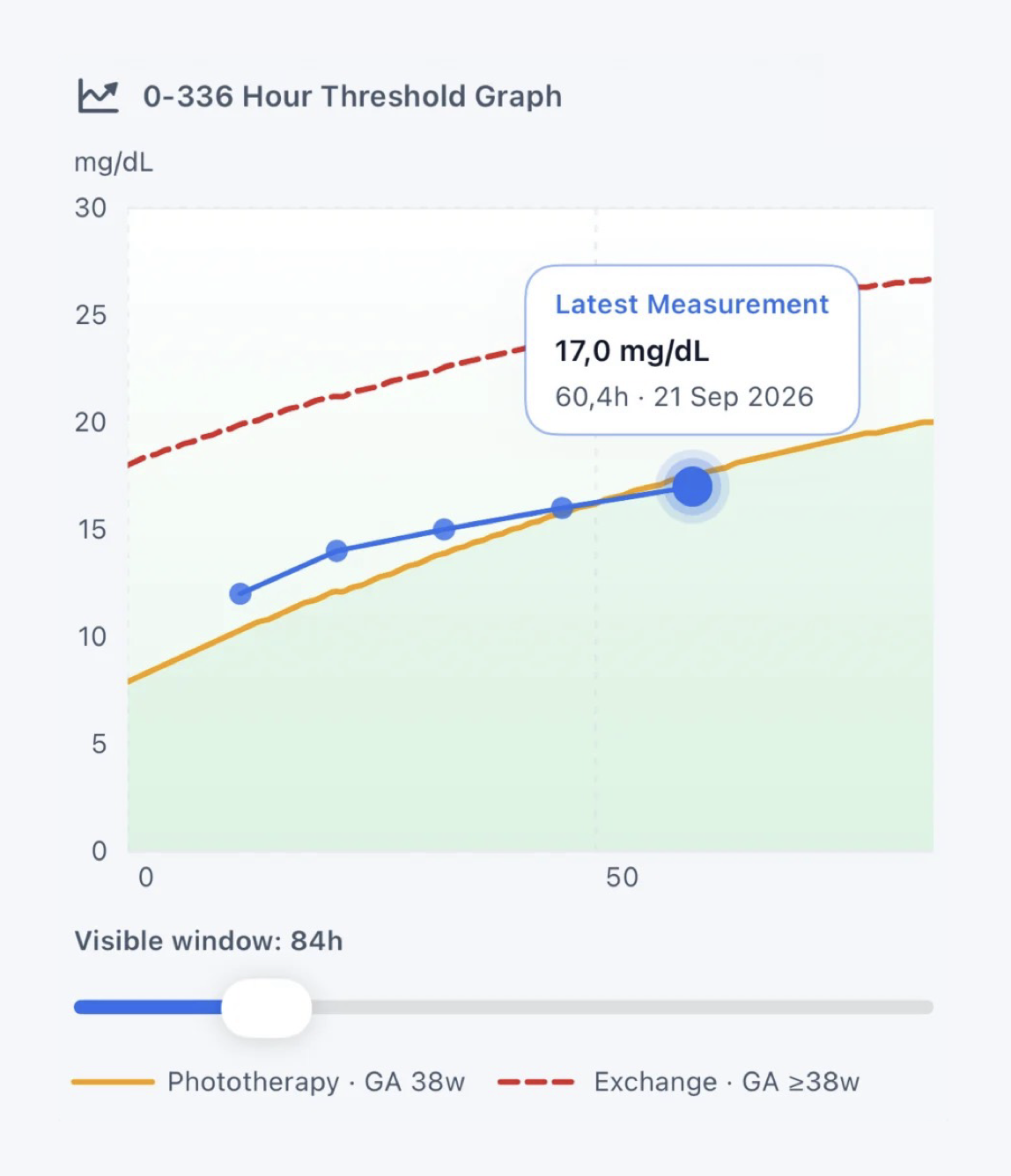
Official references
- AAP 2022 Clinical Practice Guideline ↗The primary AAP guideline for newborn infants 35 or more weeks’ gestation.
- AAP 2022 implementation FAQ ↗Clarifies risk-factor figure selection and other implementation questions.
- NICE CG98 recommendations ↗The official recommendations, threshold table, and treatment graphs.